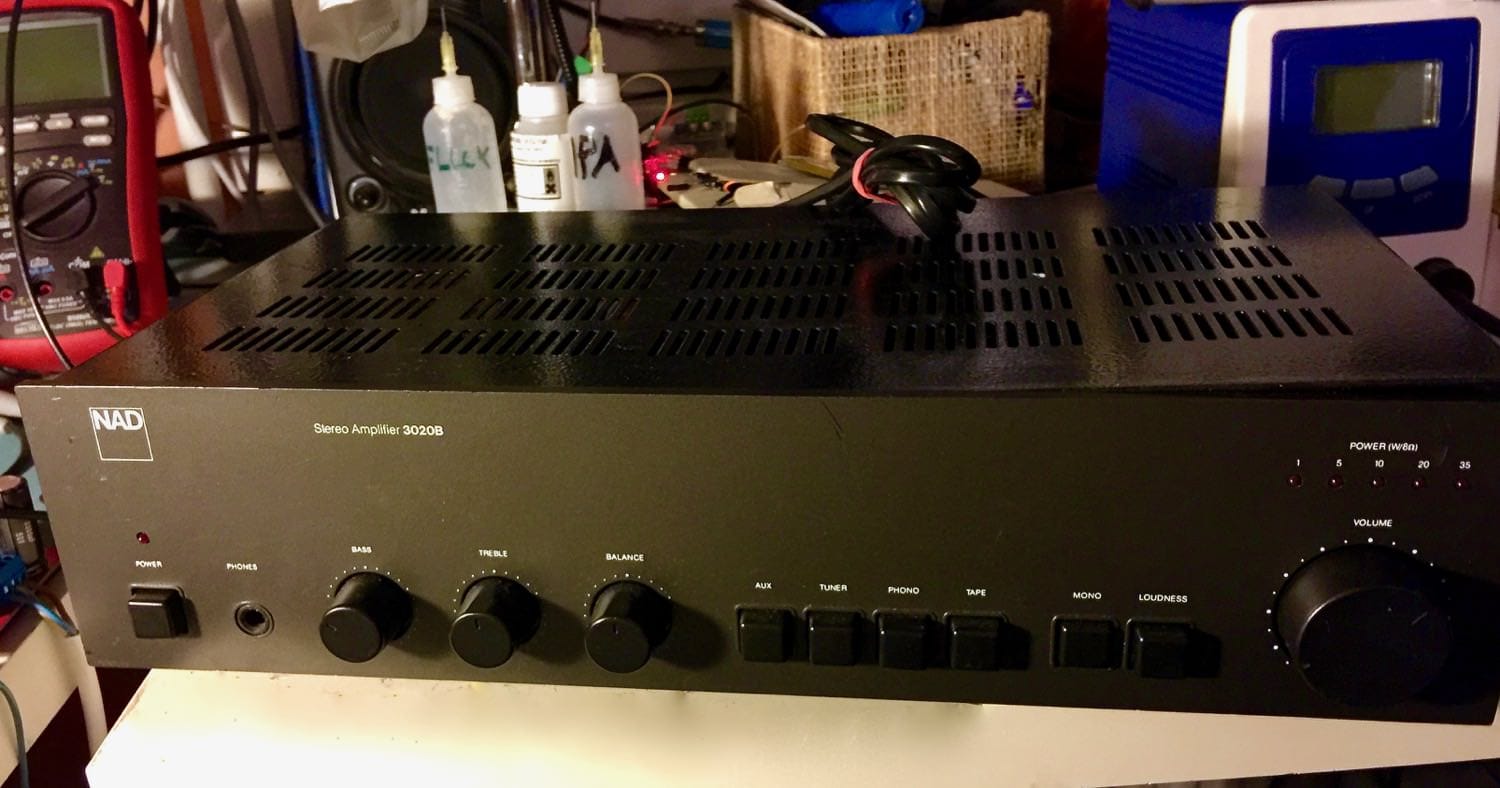
A friend of mine bought a new amplifier, but he wasn’t pleased with the sound. So he called me and asked if I could recommend a good old amplifier that could drive smaller speakers because he likes the aesthetic of older things. And the venerable NAD 3020B was the first one that came to mind. When I was young, this was the first affordable amplifier that sounded good.
It’s not a powerhouse by any means, putting out (a very conservative estimate) 2 x 20 watts. But the phono stage accepts both MM and MC pickups which is excellent, and the sound quality is exceptional. So he scoured the used market and finally found a NAD 3020B. Unfortunately, when he got it home, there was a loud hum from the output. So I told him to send it to me so I could fix it.
Time to take the amplifier apart and start doing some troubleshooting.
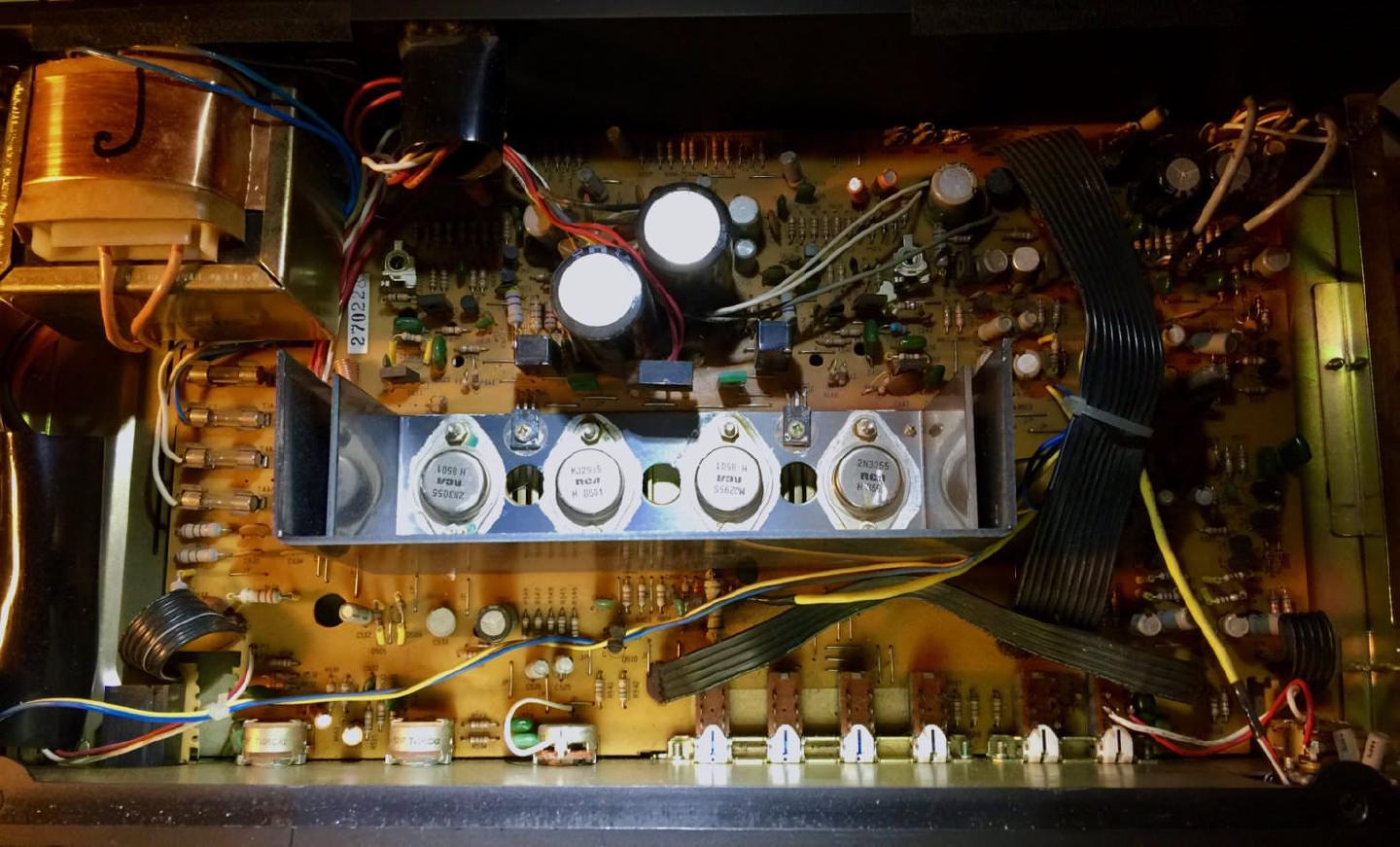
It has a bottom plate that is held in place by a few screws, so access to the components is easy. But to get to the main power capacitors, there is a metal bracket on the underside that needs removing. The bracket is held down by screws from the upper side and the front and the rear. It’s easy to start measuring once you remove it.
A Humming NAD 3020B
 The hum had a low frequency, so I guessed that the main power capacitors were dried out. If that happens, the power supply can’t filter the ripple from the bridge rectifier, giving the amp a low hum.
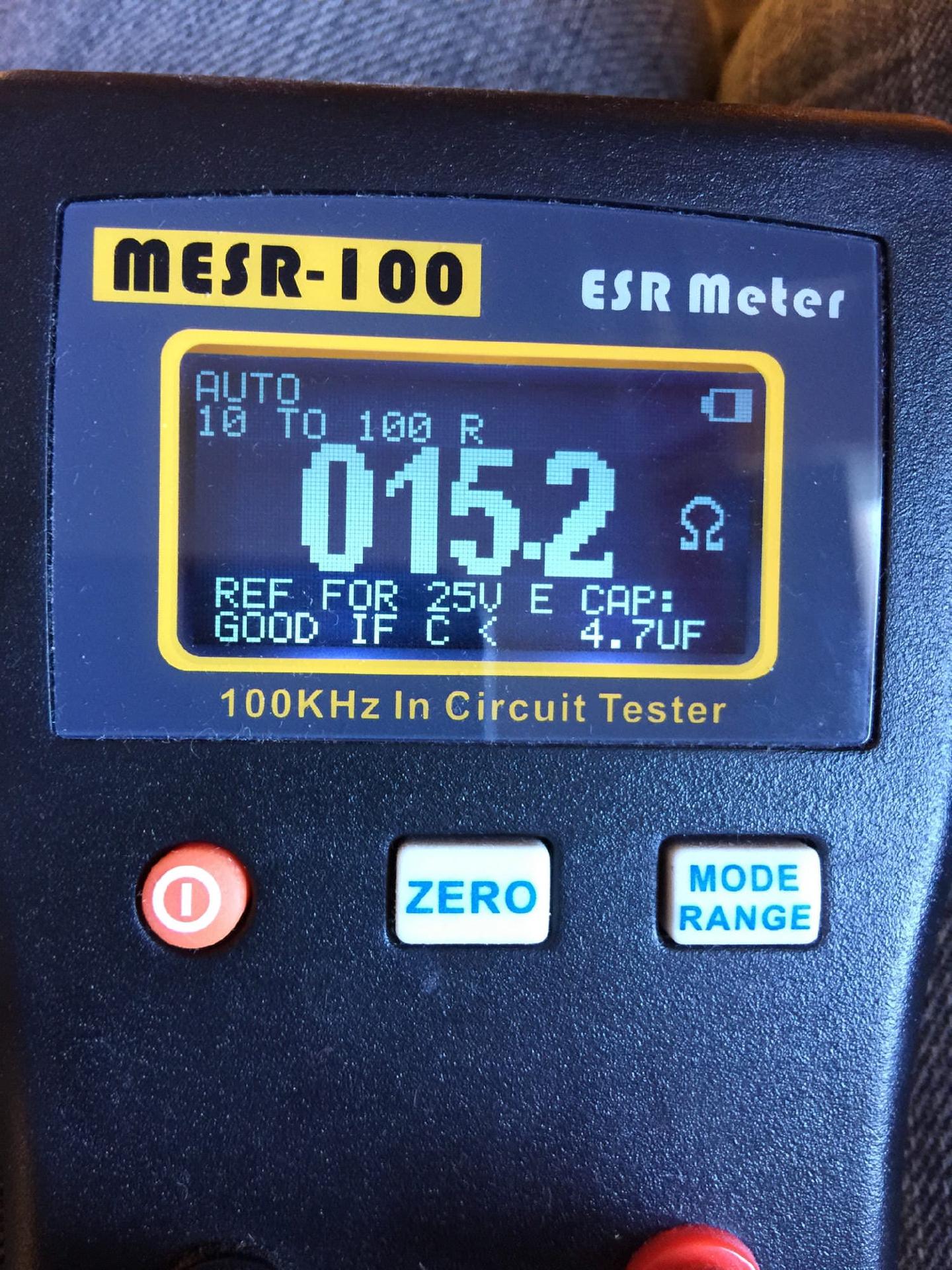
If you’re using a regular multimeter, you can’t measure the capacitors in-circuit because the voltage the multimeter puts out is enough to activate components on the circuit board, screwing up the measurements. So I usually start with my Signstek MESR-100 V2 ESR meter, a cheap meter that uses a low voltage, high-frequency sine wave to test the capacitors. That means that you can check components in-circuit without problems. Very handy!
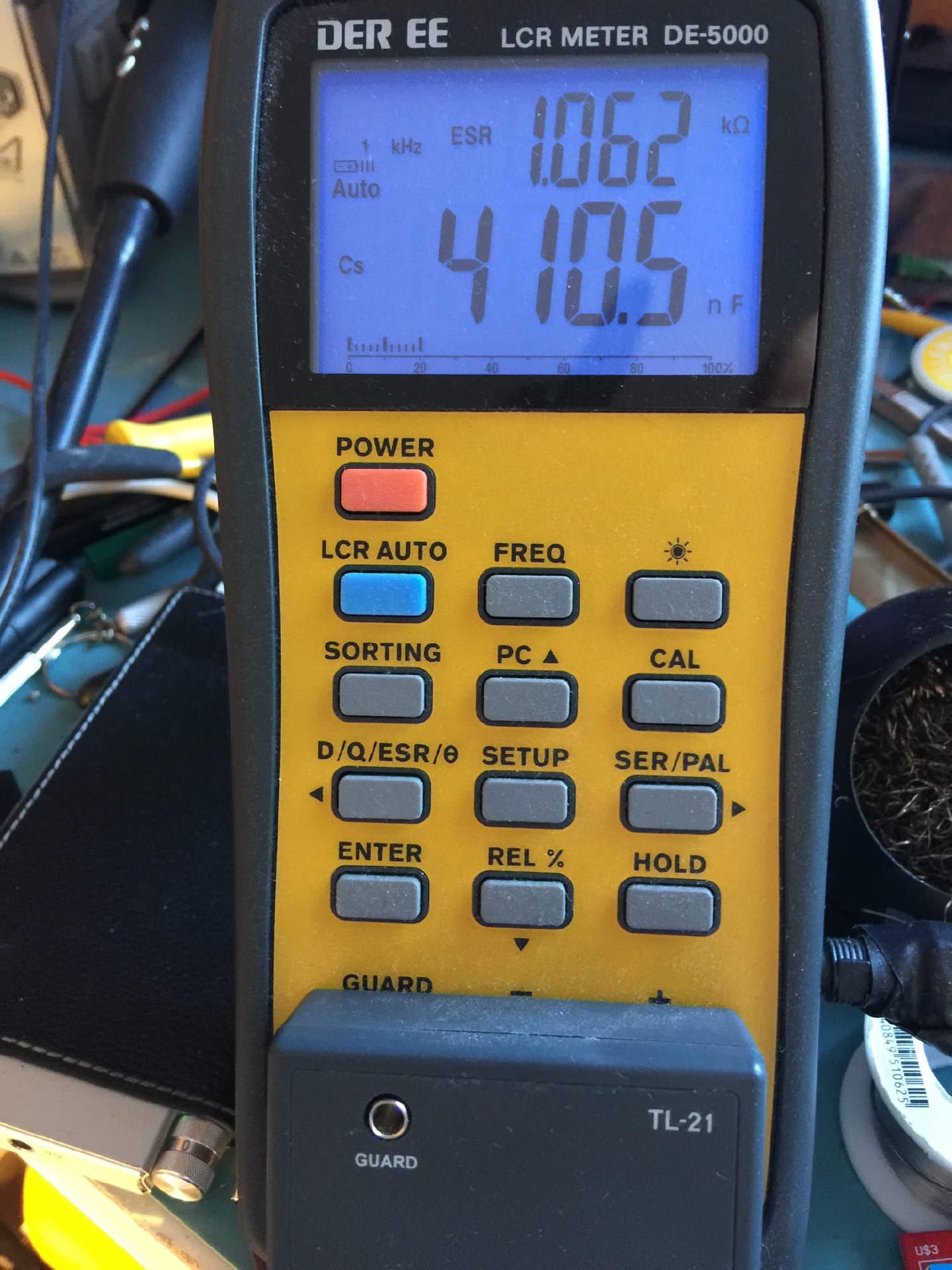
So how did one of the main power capacitors measure up? Not to well I would say, which wasn’t a surprise. I continued to measure a bunch of other capacitors as well, and they were even worse. It was clear that I needed to either just give up or replace all the capacitors. I opted for the latter. My curiosity on how the amplifier would sound was too big only to give up. Just to make sure, I desoldered a couple of caps from the power supply and the amplifier stage and used a high-quality meter, my DER EE DE-5000 Handheld LCR Meter to check the state of the caps. This meter can measure θ - phase angle, D (aka tan δ) dissipation factor, ESR, Q, series and parallel inductance, series and parallel resistance.
By the way, the DER EE DE-5000 is the same meter as the company IET Labs sells. But they will empty your wallet by taking three times the price for the same meter. Brand name and all.
Well, the measurements didn’t improve, let’s leave it at that. Some of the larger ones measured ESR in the 1k Ω range. You don’t see that every day!
Time To Turn Shopaholic
So time to go through the schematic and check all the capacitors I needed. A long list emerged. I choose to use only high-quality components so that the amplifier would last at least for thirty more years, if not longer. So only Panasonic FM, Nichicon and Nippon Chemi-Con capacitors for electrolytic capacitors and Wima for smaller caps. I opted to replace some of the smaller caps in the signal path with Wima capacitors. I also increased the capacitance and voltage rating on the main power supply caps. Instead of the 85 Cº grades of the old ones was replaced with 105 Cº rated ones. So the amplifier should be able to take a lot of abuse.
Making Life Easier
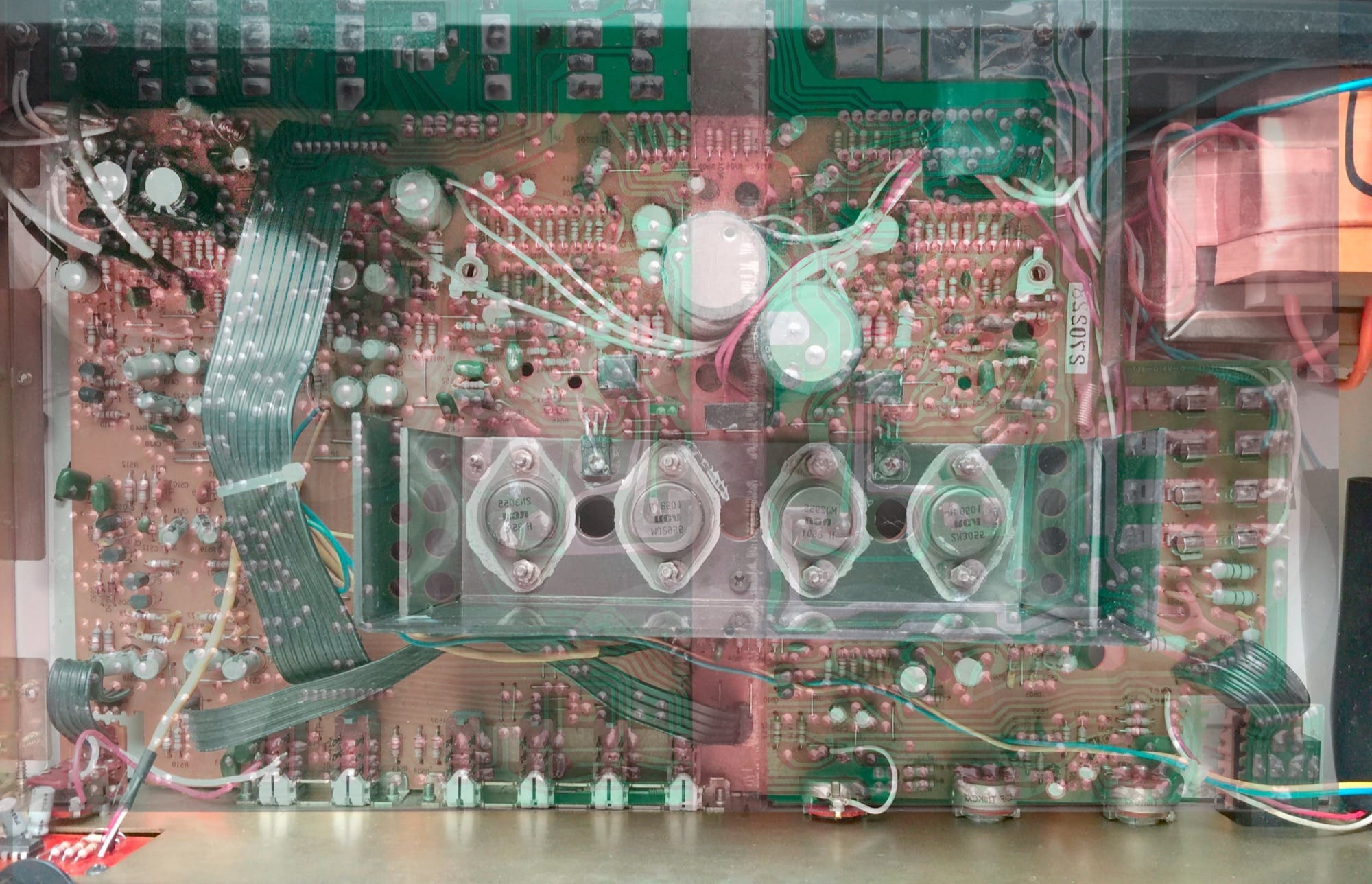
The NAD 3020B schematic and the repair manual I got for the amplifier was scanned ones I found on the internet. The scanned quality was terrible, so I had to continually flip the amp over to see where the components where. But I gave up and took a photo of the upper side and the lower side and used Photoshop, lining up the images and turning down the transparency of one of the layers, giving me a good picture of the placements of the components. Click on the image for an enlargement.
Goodie Bags!
Yes, I admit, I love to get quality components. Getting a big bag of quality capacitors delivered by my friendly DHL courier makes me smile. Call me a nerd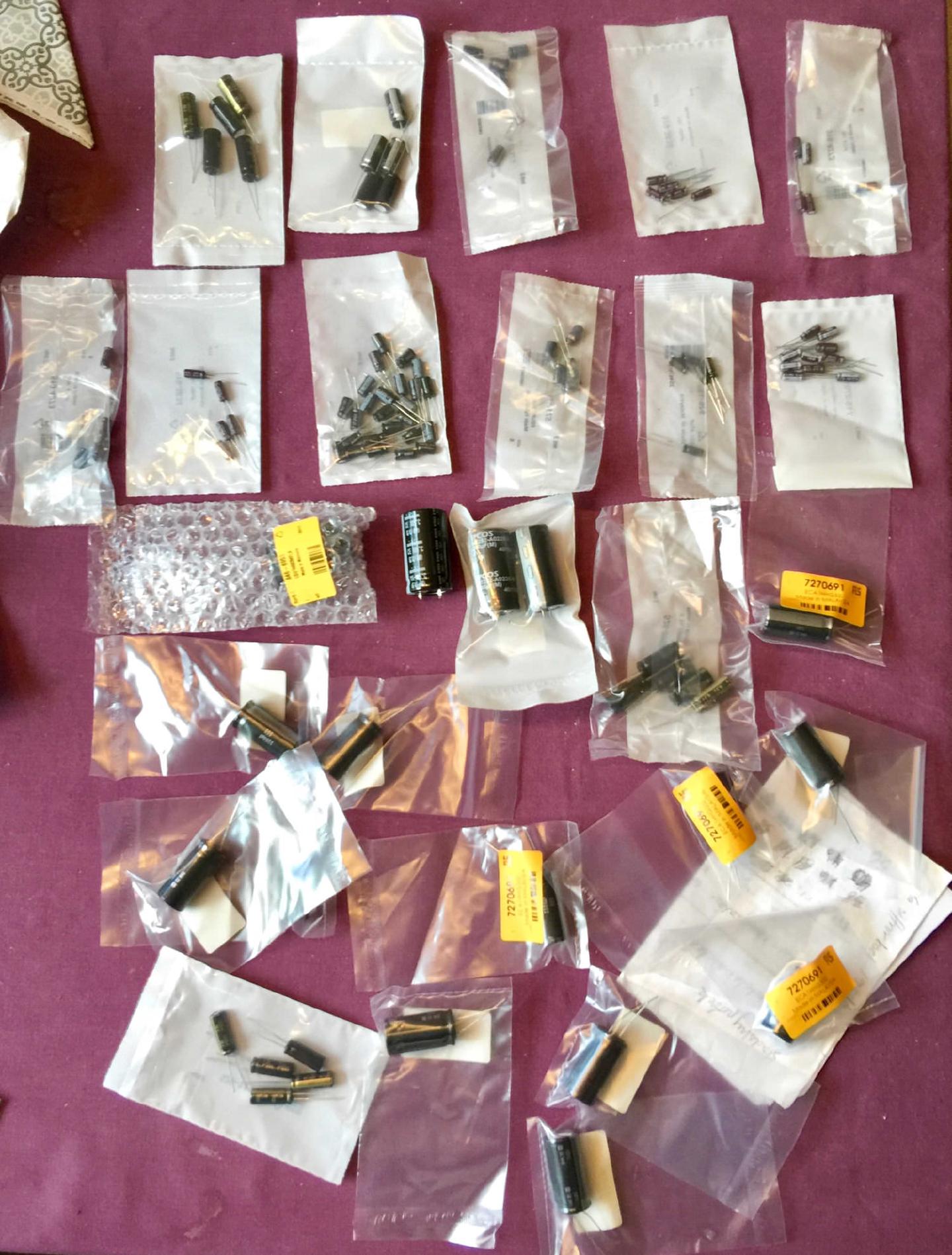 .
.
Fortunately, I bought a cheap but good Chinese vacuum desoldering station a couple of months ago, so replacing the capacitors was very easy. The NAD 3020B model is famous for having very sensitive copper planes on the PCB, which lifts quickly, but I had no problem when using the desoldering station.
So Was It Worth It?
After measuring the transistors to make sure they were in good shape and adjusting the bias, I powered up the amplifier after connecting a pair of home built speakers, and the hum was gone. And it sounded good! Good! I spent a couple of hours just leaning back, enjoying the music. Success!
The Result
I went over to my friend’s apartment, and we first listened to his newly bought Onkyo A-9010 amplifier connected to a pair of Bang & Olufsen speakers with a matching subwoofer. It sounded ok, but a bit recessed midrange. Time to hook up the NAD 3020B. We tried CD first, and sound quality was much better! I couldn’t try out the RIAA-stage beforehand because of a broken vinyl player, but to my relief, it worked perfectly. So we spent a couple of hours enjoying the music and drinking a lot of wine.
So If you can get your hands on an old NAD 3020 and have the means to restore it, go for it.
Hello, Very nice reading your article, thank you for sharing. Would it be possible to get a list of references needed for the capacitors to change and how many of them to buy. I actually got one of those amplifiers, I enjoy it already but I wonder if it could get better. Again, thank you for sharing and hoping you can post a shopping list.
Hi! You can find the schematic linked in the article. There is a list of all the components in it. Go with name brand capacitors as I describes in the article and you can't go wrong. In the power supply section, you can increase the capacitance, but you need to adhere to the specified values when it comes to the RIAA stage, because the capacitors acts as filters and if you change the values, the filter doesn't work as intended. Get a in-circuit meter (linked in the article) so you can check the status of the capacitors. No need to change working ones. You can always go up in voltage rating, space permitted, but NEVER go to lower voltage rating unless you want to see the magic smoke escaping.
Best of luck!
Jacken
Thanks Jacken. I am a noob in electronics,I'll follow your instructions the best I can. English is not my native language.
This is a good and fun way of learning. But don't forget to get to short out the capacitors before touching anything! They retain high voltage (especially in the power supply) that could kill you. Some people like to short them out with a screwdriver, but I use a high watt 10 ohm resistor so I don't kill the capacitors.
Have fun, but be careful, we are talking about 110 or 220-240 Volts, depending on where you live, so don't make it your legacy.
Jacken
I don't really think they can kill you - they can, however, give a decent "zap" - we had a teacher before H&S took over that would charge a cap a throw it to unsuspecting pupils for them to catch ( :
I'm restomodding a 3020B at the moment. Caps, wiring + and remote controlled volume. Should be a fun little project! Thanks for sharing the large potatoshopped image!.
Hi I have a nad 3020b but don't no what's the problem can't control the volume of my Amp and nothing
Very interesting article! I bought a NAD 3020B new many years ago and it still works absolutely fine. Sounds great and, using modest speakers, never need to turn the output level beyond half way even with heavy duty Organ music. Absolutely no intention of replacing it - definitely one of my best buys.